Friday, November 12, 2010

Definition and Functions of Dedicated Servers

Dedicated Servers' Functions and Definition

The use of a computer and the renting entails the use of a dedicated server. It includes the use of a web server, softwares related to the entire process, internet connection, used in the web site company providers. In this case, the main work of the server is to control the traffic amounts. This can be achieved by the host configuring and operating in remote cases, but from the client's company. Web companies prefer using a host on their premises.
Renting a serve is also a good option.In this case, the company of the client may use a specific computer or a specific choice in the various systems available. Some services providers may allow their client to purchase applications in their personal computers, due to this. The process is known as colocation.

A dedicated gpu server is used to provide a given amount of memory, hard disk space as well as bands width. The number of gigabytes delivered on a monthly basis, is what matters. In connection to this, companies offering this application, allows the renter to carry out virtual hosting. This aspect helps in renting the appliances to third parties, for their own websites. This includes the domain name system, email and file transfer protocols, which are the capabilities included in some of the companies. This is essential in providing easy to use interfaces.

The application works in basic steps. Taking part in using the address from the protocol, the use of browsers is incorporated. The domain name cheap server translates the domain name to form an IP address. In making a decision on how to access data, the browser is used on the protocol. To get the information from the particular host, the signal will then be sent. It then later goes back to the client as a web page in the browser.
Apart from working on the requests made by the users to get the data, the host is also the main determinant in some cases. A host will differentiate the various types of files,  in this case. They are kept in ways that can be easily accessed, among many other jobs. The main determinant of the jobs is the speed of the host of sorting the next account.

This aspect can be used to make the user have a full control of the server. Due to the presence of the band width, sharing space will  be outdated. Most of the websites offer the internet pages free due to this.

Anonymous Proxy Servers For Hidden Users

Hidden Users - Anonymous Proxy Servers
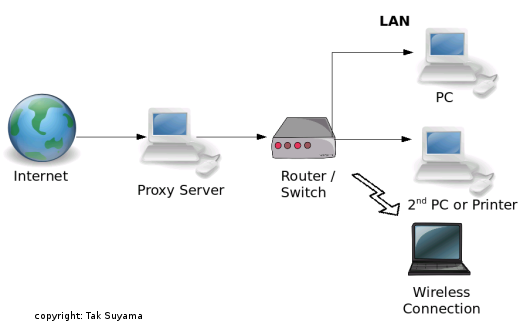
As most organizations want their employees to be utilizing their work time to its maximum effect, the draw to check personal emails and make quick updates onto social networking sites is irresistible to some. To deter such frivolity, their proxy servers are configured according to strict IT policies. Try a window, however, if you can't get out through the door.
Proxies are placed as go-betweens to separate the glass bubble of users. Also they  keep a log of all activities transpired. To bypass the organization, anonymous proxy hpc ride over the internet plains. Several servers are there to overcome restrictions placed by policies. Due to your own undoing, your IP address may inadvertently wind up on a website's black list. These servers provides you with internet anonymity.
As you access a website, it collects information on your activities and usage patterns. All you need to do is to carefully logged into their records as part of improvement. Unfortunately some sites discover your real IP address and turn it into spamming targets.
Proxies also provide better response times in returning your requested web pages. If you happen to request a page which is already cached in the proxy it sends the page to you without having to request a new one. A relief when you have an impending deadline.
Writing a wide range of topics such as proxy tesla gpu, dennis enjoys. Visit for more details.

VPS Hosting Vs Dedicated Servers

VPS Hosting Vs Dedicated Servers

VPS hosting become the main buzzwords today. A service that aims at giving its users all the advantages against dedicated servers.
What does VPS Hosting?

VPS hosting is a technology where a single physical server, having powerful memory capacities and CPU capabilities, is split into two or more servers. The reality is that there is just one server though you feel like there is more than one . It is an extremely good example of how technology is being used to become more and more eco friendly.It is an incredible solution, users are given a complete control for a hosting supermicro servers. A VPS hosting ensures there are no clashes in other partitions. You can use your portion, independently.Some benefits of VPS hosting
If you want to host a website for a specific marketing purpose it is useful. You don't want to keep the website running forever. Once your purpose has been achieved, you will have no more use for all that processing power. An enormous waste, in terms of resources. A large investment is needed to own a set of dedicated servers. You will need also a lot of money on maintenance.
Cost benefits

The dedicated servers will need a data centre, so it costs space and electricity. It needsa trained maintenance professionals, to ensure that the servers are in good working condition. In VPS hosting, these costs will simply be eliminated. The number of days you need to have the virtual server is the only pay that you will need. You can terminate it once your contract gets over. The owner of the VPS hosting will just reallocate the resources that were given to you for someone else. You can also own a VPS hosting in the house.
The VPS hosting is possible due to specialised software that is installed on the main physical server. The hypervisor of the VPS server is programmed so that it can perform the tasks of allocating resources and ensuring that each partitioned server can run independently without having any conflicts with other severs. The costs of maintenance are low, especially if you use outsourced services. The VPS hosting entry level server company will take the responsibility, unlike dedicated servers.

Monday, November 8, 2010

Windows 32bit Vs Windows 64bit

Windows 64bit Vs Windows 32bit

Many new home computers now come equipped with a 64bit processor, soon enough they will become standard. and the prices for 64bit processor have come down dramatically in the past few years. A 64bit processor is capable of running a 64bit Operating System and this is where Windows 64bit comes in. Many people think that upgrading to Windows 64bit is going to make their computer a lot faster, sadly this isn't the case.Take a look for a moment on what a 64bit processor can do that a 32bit one can't.
Memory Address Space - The difference between 32bit and 64bit is address space.Able to address a space of up to 2^32 is the 32 bit processor, which is 4,294,967,295 bytes, this is around 4 Gigabytes, which is a fair bit right?Well a 64bit processor can handle an address space between 0 and 2^64 which is; 18,446,744,073,709,551,615. Let's put this into perspective, that is 18.5 exabytes of memory! (An exabyte is 1000 terabytes, 1000 gigabytes is 1 terabyte) So that's a hell of a lot more for rackmount server! For the simple reason that a 32bit Operating system cannot address anymore than this, most home computers don't have more than 4GB!
The Benefits of 64bit - So what actually are the benefits of 64bit Windows? There really aren't any benefits if you have 4GB or less, and at this point I would safely recommend you stick to 32bit!Do you likely to need more if you have more than 4GB of memory? Probably not, unless of course you are running several very memory intensive applications at once. But as I write this I have several instance of firefox, windows media player, Microsoft excel, remote desktop open and my memory usage is sitting at around 615mb! To warrant a 64bit operating system the fact is most people just don't use enough memory.
The problems with 64bit - So far i've pretty much explained that 64bit Windows is pointless for most people, well here is another reason to not bother with it; driver support. The problem is a lot of hardware manufactures will not have 64bit drivers for a lot of their hardware for super micro servers. When this happens you can try and find a 3rd party version. Your only options are only those. Without this I simply wouldn't bother, because of this I seriously recommend that you check if your hardware has 64bit support.
So, in summary 64bit Windows looks great on paper, an enormous address space that nobody could ever possibly fill you will have.The cons outweigh the pro's especially with the inherent problem of driver support (or lack thereof!) Then I would stick with 32bit Windows for now unless your running lots of very memory hungry applications and your confident you can get 64bit versions of driver for your hardware. Chances are in a few years 64bit will gather a lot more support from hardware manufactures.

Which Processor is Best For Vista? Is it a 32 Or 64-bit Dual Core Processor?

Which Processor is Best For Vista? Is it a 32 Or 64-bit Dual Core Processor?

The requirements is very demanding for Windows Vista. Elsewhere on the internet, as far as the requirements which are there on official Microsoft site, it says that you need to have a modern processor which is around 1.8 GHz and 1GB RAM which I think is not at all enough as far as my experience is concerned. The system struggled to do even the simplest tasks like when you try to copy some files and at the same time try to install or uninstall any program. The windows update also was not working properly. Other eye candy stuff like Aero interface and Flip and Flip 3D effects struggled to work properly. I used Windows Vista on the below configuration for about 4 months and the result was pathetic.
Processor - AMD 64 3200+ (1.8 GHz)

Graphics - GeForce FX5200 AGP 256MB

RAM - 1GB RAM

Recently I upgraded my PC to the latest 8000 Series Nvidia graphic card and a Dual Core 64-Bit Processor and to PC to 2Gig of RAM and the results were outstanding for a low cost server.The one which was recently released I also installed, the latest Service Pack1 for Windows Vista. Latest configuration is given below.
Processor - AMD 64 X2 Dual Core 4200+ (2.2GHz)

RAM - 2GB RAM (PC-6400)

Graphics - GeForce 8600 PCI-EX

Now the computer was running smoothly as it was running on a dual core processor. All the stuff related with the operating system core performance was handled by the first core and other misc. stuff like playing games, watching movies, audio and video conversion was handled by the second core and super micro. The results were amazing. So overall the conclusion is that I tried all possible combination of hardware in the market starting from 32-Bit to 64-Bit processor, from single core to Dual core processor, from onboard graphics to dedicated graphic cards, from AGP to PCI-Ex graphic cards and the end configuration fit for Vista which I think is best for Windows Vista is as given below.
Processor - Intel or AMD Dual Core or Quad Core (2 GHz and above)

RAM - 2GB and above (at least PC6400)

Graphics - Atleast 256MB card (Don't go below latest 8000 series PCI-Ex card)

HDD- Atleast 80GB Hard Disk Drive.

Optical Drive - DVD-ROM Drive

All the above recommended solutions given does not reflect any official authority documentation or recommendation and are my personal opinion.So its totally up to you as to what configuration you go for.

Supermicro Does Super Job with Super Server

Super Server Done a Super Job by Supermicro

Supermicro feels that no name better suites their 1U server than “Super Server.”
A quick work of Windows Server 2008 does the Super Server 6015C-M3 work.
Some 1U (1.75-inch) servers treat Microsoft’s Windows Server like kryptonite. The Super Server avoids those perils by cranking up the horsepower with support for two dual-core/quad-core Intel Xeon Processor 5100/5200/5300/5400 sequence (with 2MB Level 2 integrated advanced transfer cache per core, 4MB L2 cache total, up to 3.40 GHz) and 48GB of DDR (double data rate) 2 533/667 registered memory.
Two Intel Gigabit Ethernet LAN 82573L adapters, an LSI 1068E PCI-E SAS controller and a motherboard loaded with real-time sensors, peeking under the cape reveals an Intel Blackford VS5100 chip set.

Measuring just 1.7 inches high, 17.2 inches wide and 19.8 inches in depth, all of those components are crammed into a low cost server that is not much bigger than a pizza box. Thanks to ample cooling, administrators will not have to worry about the unit burning the pepperoni or melting the cheese.
All accessible from the front of the unit, SuperMicro was able to make room for an optical drive and four 3.5-inch hot-swappable SAS drive trays. High-efficiency power supply provides the electrons to fire the beast up and keep it running.
Provides easy access to the internals, thanks to sliding rail mounts and a push button accessed by the flip-up hood it also uses a solid design that keeps the case.The unit is easy to install and maintain and it will not need Lois Lane to turn it on. Provide a quick snapshot of the Super Server’s health for those pesky Jimmy Olson types will appreciate all of the integrated device monitoring capabilities.
Equipped it with a pair of Harpertown (Xeon E5450 3GHz) CPUs, 6GB of DDR2 RAM and a Fujitsu 147GB SAS 15K 3.5-inch hard drive a testing was sent over Super Server with Supermicro. That configuration that should cost an integrator around $1,500.
We took the unit for a test drive when we installed Windows Server 2008 Standard Edition (64-bit). The system went from “no OS” to a member of our domain in less than an hour and the installation was quite fast.
To take a peek at performance, we threw the 64-bit version of  Passmark’s Performance Test on the system and were rewarded with an impressive Passmark rating of 2885—performance ample enough to make short work of Microsoft’s new arrivals of Windows Small Business Server 2008 and Windows Essential Business Server 2008 and supermicro servers.
System builders can expect to pay around $750 for a bare-bones unit. Complete specs can be found at Supermicro.

AMD Socket C32-based servers

Supermicro Support for AMD C32 Launch

Recognized by the industry for its award winning, first-to-market, application optimized server solutions, is pleased to join AMD in the launch of its newest line of single and dual socket AMD Opteron™ 4000 Series platforms is the Supermicro (NASDAQ: SMCI).  This family of products provides exceptional scalability and platform flexibility and combines the new lowest power-per-core¹ AMD Opteron 4100 Series server processors with our industry leading high-efficiency architecture. Ideal solutions for cloud computing environments, basic infrastructure servers, and SMB solutions, are these exceptional value AMD Socket C32-based servers.
For example, with its space saving micro-ATX form factor, the Supermicro H8SCM 1P Socket-C32 server board is compact enough to excel in mini-1U chassis environments yet also flexible enough to power full size rack and pedestal servers. Including optimization for the newest AMD Opteron 4100 Series processors and up to 64GB of registered ECC DDR3 memory in 4 DIMM slots, dual GbE LAN ports, four PCI-Express 2.0 expansion slots, and support for up to six SATA drives with RAID 0, 1, 10 and up to seven USB 2.0 ports this board features for tesla gpu.
Our innovation extends from server boards to complete systems and today, we’re also expanding our lineup of Socket C32-based servers, one of the things that sets Supermicro apart.
H8SCM-F powers the short-depth 1012C-MRF server.  This cost-effective server features one PCI-E 2.0 x16 expansion slot, two internal SATA drive bays, one DVD-ROM, two GbE LAN ports and one dedicated LAN for IPMI 2.0 remote system management, with a depth of just 14.5”. It features 350-watt Gold Level (93%+) Supermicro power supply, 1012C-MRF delivers maximum power savings and value.
The 1022TC-IBQF and 1022TC-TF are based on the award-winning Supermicro 1U Twin™ system architecture, which enables two dual-processor (DP) server nodes in a 1U chassis for server cluster. Our twin systems offer amazing consolidation options and we are seeing a substantial part of the market move to dense environments and as they do so, power efficiency becomes even more important. We’ve arranged the two DP nodes to share a 920-watt Platinum Level (94%+) Supermicro power supply to provide the ultimate in system power efficiency and energy savings. While the 1022TC-TF is a cost-optimized solution, the 1022TC-IBQF provides high-performance features like the onboard 40Gb/s QDR InfiniBand ports for high-speed connectivity.